Named by the Wind: What Other Languages Know That English Forgot
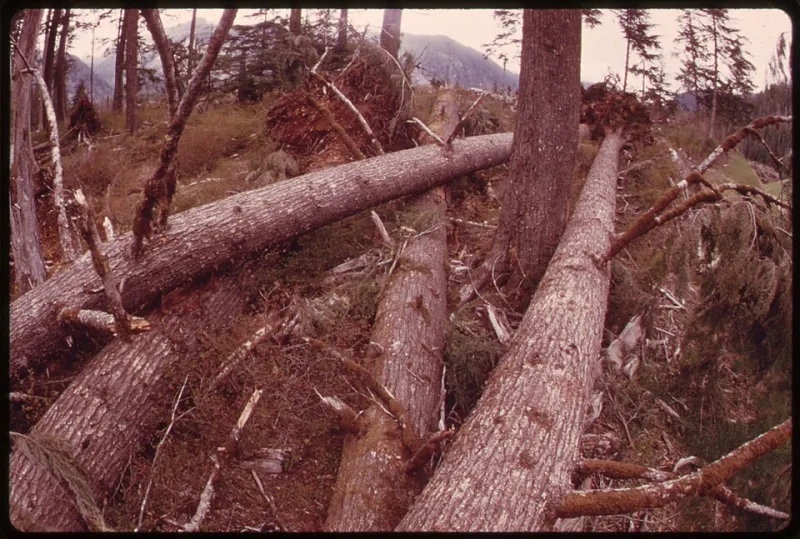
Photo: Unknown authorUnknown author or not provided, Public domain, via Wikimedia Commons
There's a wind that comes off the Rockies in late autumn — dry, fast, weirdly warm for the season — that makes the dogs restless and gives some people headaches and fills everyone else with a low, humming kind of unease they can't quite explain. In Colorado and Wyoming, people call it the Chinook. That name comes from the Indigenous peoples of the Pacific Northwest, and it carries something real in it: the sense that this wind has a character, a personality, almost a mood. It isn't just air moving. It's something.
Most of the time, though, English doesn't give us much to work with. We have wind. We have breeze. We have gust, gale, squall, draft. A handful of meteorological terms that feel more clinical than felt. For a language that prides itself on its enormous vocabulary — borrowed from everywhere, always expanding — English has a surprisingly thin shelf when it comes to the words that describe what moving air actually does to us.
Other languages, it turns out, have been paying closer attention.
The Words That Geography Built
Language doesn't develop in a vacuum. It grows out of necessity, out of daily life, out of the particular demands that a landscape makes on the people who live inside it. So it shouldn't surprise us that the cultures most intimately acquainted with wind have developed the richest vocabularies for it.
In Arabic, there are dozens of words for winds specific to the deserts and coasts of the Middle East and North Africa. The khamsin is a hot, dry, dust-laden wind that sweeps across Egypt and the Levant in spring — the word comes from the Arabic for fifty, because it was believed to blow for fifty days. The shamal blows steadily from the northwest across Iraq and the Persian Gulf, shaping the rhythm of life for anyone who works near the water. These aren't just weather reports. They're cultural touchstones, embedded in literature, in agriculture, in the way people plan their days.
In the Faroe Islands, a remote archipelago in the North Atlantic where the wind is less a seasonal visitor than a permanent resident, the Faroese language has a word — støðuvindar — for the steady, reliable winds that blow through the mountain passes. Knowing which winds are steady and which are treacherous isn't a linguistic curiosity there. It's survival.
The Japanese have kogarashi, a word that translates roughly as "the first cold wind of winter that strips the leaves from the trees." Read that again slowly. A single word for a specific wind at a specific moment in the year, carrying with it the visual image of falling leaves and the emotional weight of a season turning. English needs an entire sentence to approximate what Japanese captures in four syllables.
What We Lose When We Don't Have the Word
There's a concept in linguistics — you've probably heard of it — called the Sapir-Whorf hypothesis. In its strong form, it suggests that the language you speak actually shapes the thoughts you're capable of thinking. Most contemporary linguists have moved away from that extreme version, but the softer idea holds up pretty well: the words we have influence what we notice, what we remember, and how we make meaning out of our experiences.
Which raises an uncomfortable question for English speakers. If we don't have a word for the specific quality of wind that comes just before a thunderstorm — that electric, pressure-dropping, charged-air feeling — do we experience it less fully? Do we let it pass through us without really registering it?
I think about this when I'm sitting on my back porch in the early evening and something shifts in the air. There's a moment, maybe you know it, when the leaves start moving differently. Not the usual random flutter but something more directional, more purposeful. The light changes. The birds go quiet or suddenly get louder. Something is coming. In that moment, I reach for a word and find mostly empty space.
The Greeks had zephyros for the west wind — gentle, associated with spring and new growth. The Romans borrowed it as Zephyr and we kept a ghost of it in English, but we stripped it of its meteorological specificity. Now it's just a poetic word for a gentle breeze, decorative rather than descriptive.
Learning to Listen Differently
Here's where this gets practical, or at least personal. Knowing that other languages have these words doesn't automatically give us access to the experiences they describe. But it does something useful: it points us toward what we might be missing.
If you learn that the Portuguese have a word — vento fresco — for a fresh sea breeze, and you live near the coast, you might start noticing that breeze more consciously. You might start distinguishing it from other breezes. You might start building your own internal vocabulary for it, even if the English word never quite arrives.
This is something nature writers have always done, actually. Annie Dillard, Aldo Leopold, Terry Tempest Williams — they all developed highly specific, almost private languages for what they observed. Not because they were showing off, but because precision in description is a form of respect. It says: I was here. I paid attention. This thing happened and it mattered enough for me to find the right words for it.
The Indigenous peoples of North America had — and in many cases still have — extraordinarily nuanced vocabularies for weather and wind, developed over thousands of years of close observation. The Lakota language, for instance, distinguishes between different qualities of wind in ways that reflect both practical knowledge and spiritual relationship with the natural world. These aren't just words. They're accumulated wisdom about how to live in a particular place.
An Invitation to Notice More
I'm not suggesting we all go learn Faroese or classical Arabic, though honestly, there are worse hobbies. What I'm suggesting is something simpler: that the existence of these words is an invitation.
An invitation to slow down the next time the wind picks up and ask yourself — what kind of wind is this, exactly? Where is it coming from? What does it smell like? What does it remind you of? Is it the kind that makes you feel alive and alert, or the kind that makes you want to close the windows and stay inside? Is it carrying something with it — dust, rain, cold, pollen, the particular green smell of cut grass from somewhere upwind?
English may not have given us a single word for any of that. But the experience is available to all of us, every day, for free. The wind doesn't care what language you speak. It moves through you regardless.
Maybe the real vocabulary of wind isn't made of words at all. Maybe it's made of the moments when you stop what you're doing and actually feel it — on your face, in your hair, against the back of your hands. The words come later, or they don't come at all. Either way, you were there. You noticed.
That might be the whole point.