Writing Back to Where You Were: On the Strange Art of Missing a Place
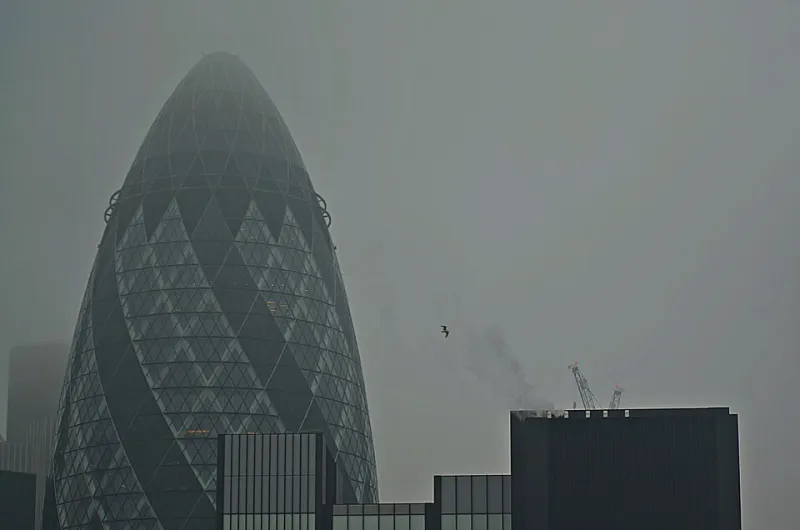
Photo: It's No Game, CC BY 2.0, via Wikimedia Commons
There's a drawer in my memory labeled something like the house on Clement Street, and whenever I open it, the same things fall out. The particular green of the painted front steps. The way fog came in off the bay around four in the afternoon, so reliably you could almost set a clock by it. The smell of the Vietnamese restaurant two doors down, which seeped through the walls in a way that should have been annoying but wasn't. I left that apartment six years ago. I have not stopped writing about it.
I don't think I'm alone in this. Something happens to language when we point it backward at a place we've left. It gets more vivid, more precise, almost painfully specific — as if the act of departure sharpens our attention in a way that actually living somewhere never quite did. We notice what we miss. We describe what we can no longer touch. And in doing so, we create something that is only partly a record of a real place, and mostly a portrait of ourselves.
The Map We Draw From Memory
Memory is not a photograph. We know this intellectually, but we forget it every time we sit down to write about somewhere we used to live. The Clement Street of my essays is real in the way that matters most to me — emotionally accurate, true in feeling — but it is not a reliable document. The steps were probably more gray than green. The fog was not always at four. The restaurant closed two years before I moved out, and I only remember it as if it were still there because I want it to be.
Writers have wrestled with this forever. James Baldwin wrote Paris the way an exile writes a city — with hunger and reverence and a kind of invented intimacy that probably couldn't have survived actually living there indefinitely. Marilynne Robinson's fictional Gilead, Iowa, carries the emotional weight of every small Midwestern town that has ever been left behind and then mourned. The place on the page is always a collaboration between geography and grief.
What's interesting isn't that our memories are imperfect. What's interesting is the specific way they distort. We don't misremember randomly. We misremember toward meaning. The details that survive are the ones that meant something — which means the place we write about is already an interpretation, already edited by the person we were becoming even as we lived there.
Who Are We Writing For?
Sometimes I think I write about that apartment in San Francisco because I'm trying to preserve it. Other times I think I'm writing to preserve myself — the specific version of me who was twenty-eight, broke in a cheerful way, and convinced that everything important was still ahead. The place is just the container. What I'm really reaching for is a self that no longer exists.
This might be why writing about lost places can feel so urgent and so futile at the same time. We're not actually trying to go back. We're trying to understand the distance between who we were there and who we've become since. The place is a fixed point, a before-and-after marker. I was this person in that kitchen. I am a different person now. The writing is how we measure the gap.
That gap can be tender or it can be uncomfortable. Sometimes the place we left behind holds a version of ourselves we're glad to have outgrown — the town where we felt invisible, the apartment where a difficult relationship finally ended, the state we fled because it couldn't hold what we were becoming. We write about those places differently. Not with longing exactly, but with a strange mix of relief and recognition. That was real too, the writing insists. That counted.
The Problem With Preservation
Here's the thing no one tells you about writing a place into permanence: the place keeps changing without you. The house on Clement Street now has different tenants, different smells, different scuff marks on the floor. The city around it has changed in ways that would probably break my heart a little. My essay, if I ever finish it, will be a document of something that exists nowhere except in language now.
There's both loss and freedom in that. Loss, obviously — the real place has moved on and doesn't need my words to survive. But freedom, too, because the version I'm writing is mine. I don't have to be accurate. I have to be true, which is a different thing. True to the feeling of standing at that kitchen window on a Tuesday morning. True to what it meant to be that particular person in that particular fog.
American writers have always been obsessed with place in this way — Faulkner and his Mississippi, Didion and her California, Carver and his Pacific Northwest mill towns. Part of what makes those landscapes feel so alive on the page is that they're being written from some angle of longing, some angle of distance. The writing happens after. The emotion that powers it is the gap between then and now.
What Home Actually Means
Maybe the most honest thing I can say is this: I'm not sure my essays about Clement Street are really about Clement Street. I think they're about belonging — about the particular ache of having felt at home somewhere and then having to leave it, and then having to figure out what home even means when it's no longer a fixed address.
A lot of us are living that question right now. We moved for jobs, for partners, for cheaper rent, for reasons we can't fully articulate. We ended up somewhere new and found it didn't feel like ours yet. We went back to visit and found the old place didn't feel quite like ours anymore either. We're caught in between, writing postcards to both directions.
And maybe that's exactly where the writing should happen. In the in-between. In the gap between who we were and who we're becoming. Because that's where language does its best work — not describing what is, but reaching toward what was, and in the reaching, figuring out what we actually want next.
The fog on Clement Street is still there, I'm sure. Rolling in around four, or maybe three-thirty, or whenever it feels like it. It doesn't need me to remember it. But I need to remember it. And the writing is how I figure out why.