The Art of Hearing Again: What the World Sounds Like When You Finally Go Quiet
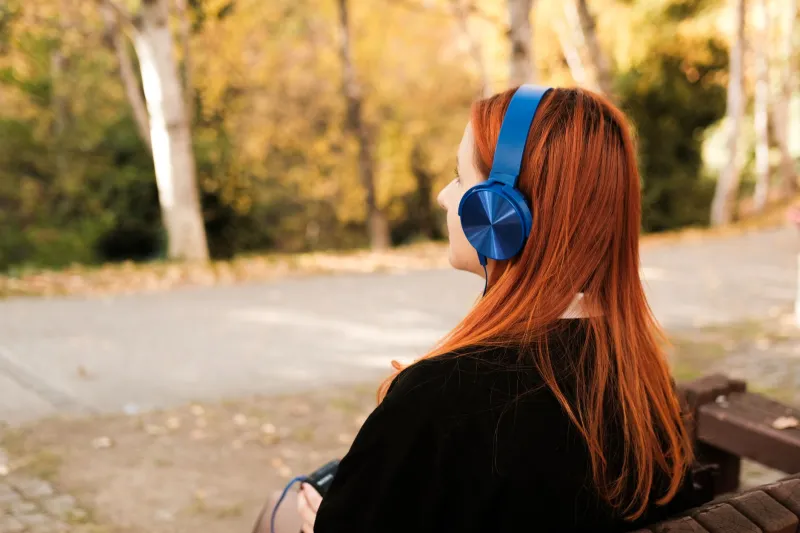
I didn't notice when I stopped listening. That's the honest part. It happened so gradually — one earbud in while walking the dog, a podcast running through breakfast, music filling the car before I'd even turned out of the driveway — that silence became something I needed to escape rather than enter. I had curated a near-constant soundtrack to my own life, and somewhere underneath all of it, the world was still making sounds I hadn't heard in years.
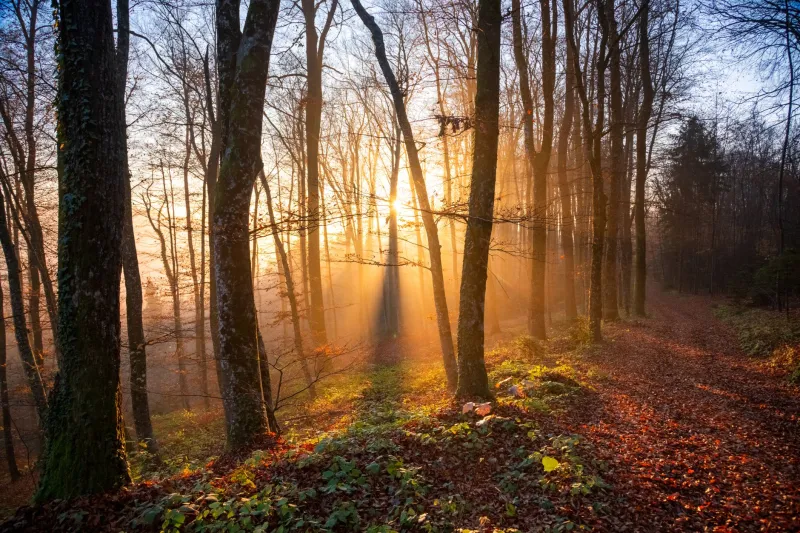
The moment I realized this, I was sitting on the back porch of my sister's house in rural Tennessee, jet-lagged and half-awake, my phone dead and my charger inside. The yard was deep and tree-lined. It was early morning. And the sound that came to me — slowly, the way your eyes adjust to a dark room — was enormous. Crickets. Wind through the upper canopy of oaks. A creek somewhere I couldn't see. A bird I couldn't name calling out from somewhere to my left, and then, after a pause, another answering from farther away.
I sat there for a long time. Not meditating, not journaling, not being intentional about anything. Just sitting in something I had forgotten was available to me.
The Noise We've Chosen
There's a reason silence feels uncomfortable at first. We've been conditioned to treat it as a void, something to be filled. Streaming platforms, social media algorithms, and notification systems are all designed around one core assumption: that your attention is most valuable when it's occupied. The modern American day is, by design, acoustically saturated. We wake to alarms, commute to podcasts, work to background music, exercise to playlists, and fall asleep to white noise machines or television murmur.
None of this is inherently bad. But there's a cost we don't often name. When every quiet moment becomes an opportunity to consume something, we slowly lose our ability to simply receive the world as it is. We stop hearing what isn't produced for us.
Ecologists and acoustic biologists have a word for this: soundscape. It refers to the full acoustic environment of a place — the biophony (sounds from living organisms), geophony (sounds from the physical environment, like wind and water), and anthrophony (human-made sound). Research from scientists like Bernie Krause, who has spent decades recording natural soundscapes around the world, suggests that these acoustic environments are as ecologically meaningful as anything we can see. Animals communicate through them. Plants respond to them. And human beings, for most of our species' history, were embedded in them.
We have largely removed ourselves from that embedding. And I think it's making us lonelier than we know.
What You Miss When You Stop Hearing
Loneliness is a complicated word. We usually think of it as the absence of people, but I've come to believe it's more often the absence of connection — and connection doesn't require another human being. There's a particular kind of companionship that comes from noticing the world around you: the way a stand of aspens sounds different in a light wind than in a heavy one, the way rain on a roof changes pitch as a storm passes over, the way a single frog call at dusk seems to contain an entire season.
These sounds aren't background. They're a conversation. And when we stop listening, we stop participating.
I've talked to people who live in cities and genuinely cannot identify the sound of wind in leaves because they've never had occasion to sit still long enough to hear it separate from traffic. I've met hikers who walk the same trails with headphones in, missing the wood thrush's spiraling song, which is, objectively, one of the most beautiful sounds produced on this continent. I'm not judging — I've been that person. But I think we're all quietly grieving a connection we can't quite name because we've forgotten what it felt like in the first place.
Rewilding Your Ears
The good news is that this isn't a permanent condition. The ears, unlike some things, are patient. They'll start working again the moment you let them.
Rewilding your hearing doesn't require a cabin in the woods or a silent retreat in Vermont. It starts smaller than that. It starts with leaving one earbud out on your morning walk. It starts with sitting on your apartment balcony for ten minutes without your phone. It starts with opening a window and actually listening to what comes through it — not as ambient noise, but as information. What birds are out there? Is the wind from the east today? Can you hear rain before it arrives?
These questions sound simple, but the practice of asking them changes something. It shifts you from passive recipient of manufactured sound to active participant in the acoustic world you actually inhabit. And over time, that shift does something to how you feel about where you are. You become, slowly, less like a visitor to your own surroundings and more like someone who belongs there.
I started keeping a loose mental list of sounds I'd rediscovered: the specific creak of my neighborhood's old oak trees in late November wind, the way Canada geese sound different flying over at night than during the day, the almost musical drip of my kitchen faucet that I'd been drowning out for two years. None of these things changed my life dramatically. But they changed how present I felt in it.
The Connection You Weren't Expecting
Here's what surprised me most: listening to the natural world made me a better listener to people.
I don't fully understand why this is, but I have a theory. When you practice receiving sound without immediately categorizing or reacting to it — when you just let a birdsong or a wind shift exist in your awareness without needing to do anything about it — you develop a kind of receptivity. You get better at sitting with things that aren't resolved. You get more comfortable with pauses. You stop needing to fill every silence in a conversation, because silence has stopped feeling like a problem.
Some of the loneliness we carry around isn't because no one is talking to us. It's because we've forgotten how to be genuinely present when they do. We're composing our response before they've finished. We're half-listening while monitoring our own reactions. Real listening — the kind that makes people feel heard — requires the same quality of attention that natural soundscapes demand: unhurried, open, without an agenda.
The world outside has been practicing that kind of communication for a very long time. The wind doesn't rush its sentence. The creek doesn't skip ahead. The call and response of birds at dawn doesn't require anyone to be performing.
Maybe that's what we've been missing. Not more connection, exactly, but a different quality of it. The kind that starts not with speaking, but with finally going quiet enough to hear what's already there.
So go ahead. Step outside. Leave the earbuds on the counter. Let the morning be loud in the way that mornings used to be before we decided that loud had to mean us.