When Nothing Moves: The Uncomfortable Gift of a Windless Day
I noticed it first through the kitchen window. The maple in the backyard — the one that usually gossips with every passing breeze — was completely, unnervingly still. Not a single leaf trembled. The branches held their position like a photograph of a tree rather than an actual living one. I stood there longer than I should have, coffee going cold in my hand, trying to figure out why it unsettled me.
It took a minute to name it: silence. Real silence. The kind that doesn't happen much anymore.
The Sound We Forgot We Were Making
We talk a lot about noise pollution in the abstract — the hum of traffic, the buzz of notifications, the endless scroll of content that fills every spare second of our days. But there's a subtler kind of noise that rarely gets named: the ambient expectation to always be producing something. A thought, an opinion, a caption, a response. In America especially, we've built a culture that rewards constant output. Silence isn't just uncomfortable — it can feel like failure.
Windless days have a way of exposing that. When the world outside goes quiet, it throws the inner chatter into sharp relief. You realize how accustomed you've become to the background hum of things — wind through screens, leaves dragging across pavement, the creak of branches overhead. Take all of that away and you're left with yourself in a way that feels almost confrontational.
I've started to think of these still days as nature's version of a hard reset.
Stillness That Doesn't Soothe
Here's the paradox nobody warns you about: silence isn't always peaceful. Sometimes it's the opposite.
There's a specific kind of anxiety that settles in on a windless afternoon in late summer — the air thick and unmoving, the light flat and directionless. Meteorologists sometimes call this "dead calm," and the name fits. It doesn't feel restful so much as suspended, like the world is waiting for something to happen. Weather-watchers know that this kind of stillness often precedes a storm. The atmosphere is gathering itself.
Emotionally, I think we work the same way. The moments before a big decision, a difficult conversation, or a personal reckoning can feel exactly like that: airless, pressurized, too quiet. We mistake the absence of movement for peace, but really it's just tension wearing a different outfit.
And yet — and this is the part that keeps pulling me back — there's something valuable hiding inside that discomfort. The stillness isn't empty. It's full of things we haven't been paying attention to.
What Gets Heard in the Absence of Wind
On a calm day last October, I drove out to a reservoir about forty minutes from my house. No particular reason — just that restless, reaching feeling that sometimes shows up on weekends. I parked, walked down to the water's edge, and sat on a flat rock.
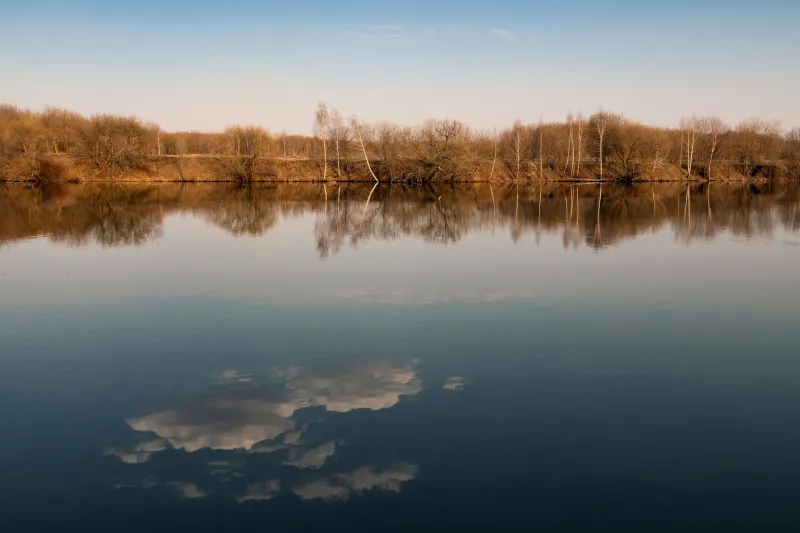
With no wind, the surface of the reservoir was a perfect mirror. I could hear things I'd never noticed before on my previous visits: the distant call of a kingfisher, the soft lap of water against the rocks, my own breathing. I sat there for probably twenty minutes doing absolutely nothing, and it felt like the most productive twenty minutes I'd had in months.
Not because I solved anything. Not because I came up with a great idea or processed some long-buried feeling. Just because I was present in a way that the usual noise — wind, music, podcasts, the running commentary of my own anxious thoughts — doesn't usually allow.
Silence, I realized, isn't the absence of content. It's the presence of something subtler.
The Pressure to Fill the Quiet
Spend five minutes in genuine silence and notice what happens. Most of us reach for our phones. Or we start mentally composing the email we need to send, or rehearsing the conversation we're dreading, or running through tomorrow's to-do list. We are deeply, almost pathologically, uncomfortable with empty space.
Social media has accelerated this in ways that feel almost cruel in retrospect. Platforms are engineered to reward volume — more posts, more engagement, more presence. The person who goes quiet for a few days loses reach. The account that doesn't post gets buried. We've internalized these mechanics even when we step away from the screen, so that silence in our actual lives starts to feel like falling behind.
But here's what I keep coming back to: the most meaningful things I've ever heard — from other people, from books, from my own gut — arrived in quiet moments. Not when I was performing or consuming or producing. When I was, for a few minutes, just still.
Learning to Let the Air Rest
I don't think the answer is to chase silence obsessively, to book a meditation retreat or declare a digital detox and treat stillness like another item on the self-improvement checklist. That kind of forced quiet can be just as performative as any other noise.
What I'm after is something more ordinary than that. It's about noticing when the wind stops — literally or figuratively — and resisting the urge to immediately fill that space. To let the maple just stand there, motionless, without deciding it means something is wrong.
Some days the air simply doesn't move. And maybe that's not a warning. Maybe it's an invitation.
The windless days are rarer than we think, and they don't last long. A front moves through, a storm kicks up, and everything starts rustling and swaying again. But in that narrow window of stillness, there's a kind of clarity available that nothing else quite offers. The world stops talking long enough for you to hear what it's actually been trying to say.
I've started treating those days like small gifts — a little strange, a little uncomfortable, and entirely worth sitting with.