When the Sky Breaks Open: Learning to Speak Like a Storm
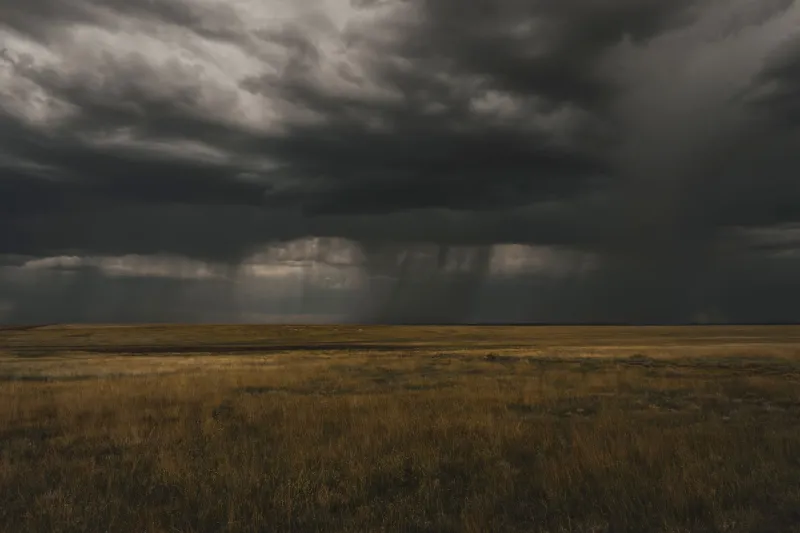
I grew up in Ohio, where summer storms don't politely announce themselves. They build. They brood. They stack themselves into towering gray columns on the western horizon for hours before the first crack of lightning splits the air. As a kid, I'd press my nose against the screen door and watch the whole production unfold — the way the wind would shift direction, the way the birds would go suddenly, conspicuously quiet.
I didn't know it then, but I was watching something I'd spend most of my adult life trying to do myself: gather enough energy to finally say what I meant.
The Pressure That Builds
Meteorologists call it convective instability. Warm, humid air near the ground gets trapped beneath a layer of cooler air above it, and the tension between those two systems just... accumulates. The atmosphere wants to speak, in a sense. It has something to express. But the conditions aren't right yet, so it holds, and holds, and holds — until the cap breaks and everything rushes upward at once.
I've lived inside that feeling more times than I can count.
There was the conversation I needed to have with my mother about how her offhand comments about my weight had followed me into my thirties. There was the moment I sat across from a friend who had repeatedly canceled plans and said nothing, just smiled and said it was fine. There was the relationship I stayed in two years too long because I couldn't figure out how to say this isn't working without feeling like I was causing a disaster.
The thing about swallowed words is that they don't disappear. They accumulate. They press upward against the underside of your composure, looking for a crack.
What Thunder Actually Is
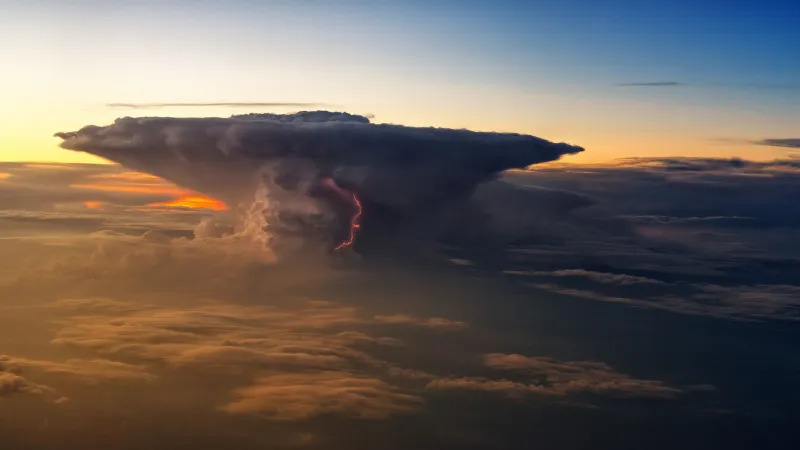
Here's the part that always gets me: thunder isn't the storm's main event. It's a side effect. Lightning superheats the air around it so rapidly — we're talking around 50,000 degrees Fahrenheit, roughly five times hotter than the surface of the sun — that the air expands faster than the speed of sound. Thunder is just that expansion. It's the atmosphere's way of making room for what just happened.
Maybe that's what our difficult conversations are, too. Not the point, exactly. But the necessary release that follows when something true finally moves through us.
I used to think that speaking hard truths was about courage in the dramatic, cinematic sense — jaw set, voice steady, the kind of moment that plays well in a movie. But the more I've sat with it, the more I think it's actually about pressure and release. About the physics of honesty.
The Stillness Before
Anyone who's spent time outdoors in tornado country knows the particular quality of air just before a serious storm. It gets heavy. Green-tinged sometimes. Unnervingly calm. That's not nothing — that's the atmosphere organizing itself, pulling energy inward before releasing it outward.
I've started to recognize that same quality in myself before I say something that matters. A strange interior stillness. A gathering. My therapist calls it "resourcing." My grandmother would have called it "getting your nerve up." Either way, it's real, and it's not weakness. It's the storm doing what storms do before they break open.
For years I interpreted that feeling as a sign to stay quiet. The tightness in my chest, the way my thoughts would suddenly scatter — I read those as warnings. Don't. Not now. It'll be too much. But I've come to understand them differently. That sensation isn't the body telling you to retreat. It's the body telling you something important is about to happen.
When It Finally Rains
I called my mother on a Tuesday in March, three years ago. It was raining in Columbus — not a dramatic storm, just a steady, gray drizzle — and I sat in my car in a Trader Joe's parking lot and said the things I'd been holding for a decade. My voice shook. I said words in the wrong order. I cried in a way that felt embarrassing and unstoppable at the same time.
She was quiet for a long moment. Then she said she hadn't known. Then she apologized.
It didn't fix everything. Real conversations rarely do. But the air between us shifted in a way I'd stopped believing was possible. Something that had been stuck finally moved.
That's the other thing about storms: the air after is different. Cleaner. Charged in a way that feels alive rather than threatening. Meteorologists measure it as a drop in humidity, a change in barometric pressure. Poets call it petrichor — that particular smell of rain on dry earth. Whatever you call it, you know it when you breathe it in.
Finding Your Own Weather Pattern
I'm not suggesting we all go around thundering at the people in our lives. Storms can cause damage; that's real. There's a difference between speaking your truth and just unleashing pressure on whoever happens to be nearby.
But I do think there's something worth sitting with in the way a storm doesn't apologize for its own intensity. It doesn't make itself smaller to avoid inconveniencing the picnic. It arrives at the speed of its own necessity.
Most of us have been taught — especially women, especially people who grew up in households where keeping the peace was a survival skill — that our difficult feelings are inconvenient. That our needs are too much. That the storm inside us should be managed into something more palatable before we let anyone else see it.
The sky has never once agreed with that assessment.
Listening to What Rumbles
These days, when I hear thunder rolling in from the west, I try to pay attention to what's rumbling in me, too. What have I been holding? What's been building pressure under the surface of my politeness, my agreeableness, my reflexive I'm fine?
Sometimes the answer is nothing. Sometimes the weather is just weather.
But sometimes I notice something that needs to be said, and I try to let the storm outside remind me that intensity isn't the same as destruction. That breaking open doesn't mean breaking apart. That the most honest things we say are often the ones that arrive like thunder — unexpected, a little startling, and somehow, finally, a relief.
The sky has been practicing this for a long time. We could learn a thing or two from how it doesn't hold back.