What Your Longing Is Missing: The Words Other Cultures Use for Homesickness
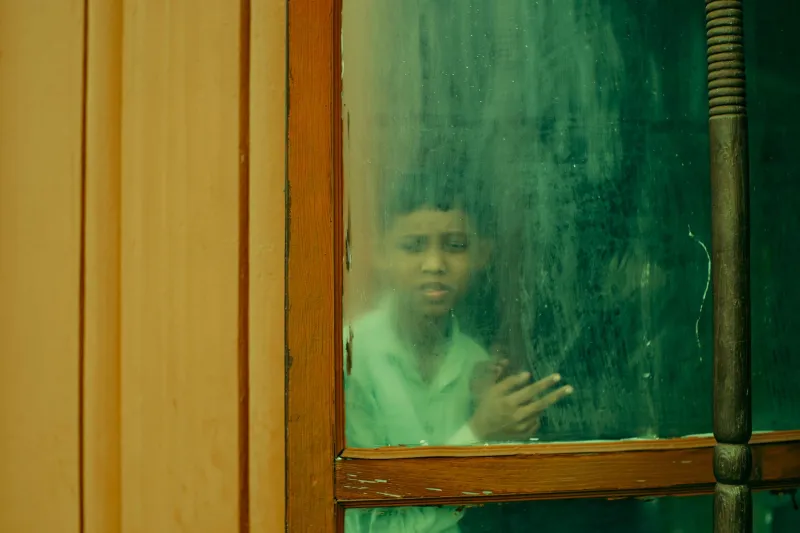
There's a particular kind of ache that shows up uninvited. It might arrive while you're standing in a grocery store parking lot in a city that's been your home for six years, watching a stranger's dog wait by a car door. Or it surfaces at 11 p.m. when a smell — something like cedar, or your grandmother's hand lotion, or a specific brand of laundry detergent — drifts in through a cracked window. You know what the feeling is. You just don't quite have the word for it.
English gives you homesick. It's a functional word, honest in its way. But it's also blunt — a compound noun that sounds more like a medical complaint than an interior landscape. Homesick. Like you've caught something you need to sleep off.
Other languages disagree.
Saudade and the Weight of What Was
Portuguese has saudade (pronounced roughly sow-DAH-day), a word so central to Portuguese and Brazilian culture that entire books, musical traditions, and philosophical frameworks have been built around it. Saudade isn't just missing something. It's the melancholy pleasure of longing for something you've loved — a place, a person, a version of yourself — often tinged with the awareness that what you miss may never return, or may have never fully existed the way memory insists it did.
There's grief in saudade, but also sweetness. It's the feeling you get watching old home videos. The feeling of driving through your hometown and noticing that the diner where you used to eat after high school football games is now a cell phone store. Saudade holds space for the love and the loss simultaneously, without forcing you to choose between them.
English doesn't really do that. We tend to separate grief and gratitude into different emotional rooms.
Natsukashii and the Warmth of the Past
Japanese offers natsukashii (nah-tsoo-KAH-shee), which translates loosely as "nostalgic" but carries a warmer, more immediate quality. When something is natsukashii, it's not just that you remember it fondly — it's that the memory has arrived with physical presence, like a hand on your shoulder. You might say it when a song from your childhood comes on the radio and you feel, just for a moment, genuinely transported. Or when the smell of a summer festival brings back a whole childhood in a single breath.
Natsukashii is less about loss and more about the strange gift of being visited by your own past. It's almost tender — the past reaching forward to tap you on the cheek.
Hiraeth and the Place That Never Existed
Then there's hiraeth, a Welsh word that English-speaking Americans have started borrowing with increasing frequency, often without knowing quite why it resonates. Hiraeth (roughly HEER-eyeth) is homesickness for a home you may never have had, or can't return to, or that exists now only in imagination. It's the longing for something that feels like home but has no address.
For many Americans — a population built on migration, displacement, and reinvention — hiraeth might be the most honest word available. Generations of families have moved so often, assimilated so thoroughly, or been so forcibly disconnected from ancestral places that the idea of a singular, stable home is more mythology than memory. Hiraeth names the ache of that rootlessness without requiring you to identify a specific place you've lost.
What English Leaves Out
The absence of precise language for these experiences isn't just a linguistic inconvenience. Language shapes the way we process emotion. When you don't have a word for something, you often can't fully think it — which means you can't fully feel it through, examine it, or share it with anyone else.
English-speaking Americans tend to deal with homesickness by either minimizing it ("I'm fine, I just miss home a little") or pathologizing it ("I think I'm depressed"). Neither response honors the complexity of what's actually happening. We end up treating a layered, meaningful emotional experience as either a minor inconvenience or a clinical problem, because we don't have the vocabulary for the middle ground.
This matters more than it might seem. Grief researchers have found that the ability to name emotions with precision — what psychologists call emotional granularity — is directly linked to better mental health outcomes and more effective coping. People who can distinguish between disappointed and betrayed, between anxious and overwhelmed, navigate their emotional lives with more resilience. The same principle applies to homesickness. When you can say "this is saudade — I'm grieving something I also loved deeply" or "this is hiraeth — I'm mourning a sense of belonging I never quite found," the feeling becomes less like weather you're stuck in and more like terrain you can walk through.
What We Might Gain in the Gap
There's an argument, though, for sitting with the imprecision.
Some writers and thinkers suggest that untranslatable words aren't just vocabulary waiting to be imported — they're entire cultural frameworks, and borrowing the word without the framework can flatten them. Saudade, for instance, is inseparable from centuries of Portuguese history, from the Age of Exploration and the grief of sailors leaving and sometimes never returning. Hiraeth is rooted in a specifically Welsh relationship to land, language, and colonial erasure. You can't fully carry those words without their weight.
Maybe the linguistic gap in English isn't only a loss. Maybe it's also an invitation — to sit with a feeling longer before labeling it, to let the ache be a little undefined, a little wild. To notice that you're homesick without immediately needing to explain it, categorize it, or resolve it.
Nature writing has a tradition of this, actually. The best writers in that space — think Annie Dillard at Tinker Creek, or Barry Lopez crossing the Arctic — spend a lot of time refusing to collapse experience into easy meaning. They let things be strange and unresolved. Maybe our emotional lives deserve the same respect.
The Ache as a Kind of Map
When that grocery store parking lot feeling shows up again, or the late-night smell of cedar, try this: don't reach immediately for a word. Let the feeling settle. Notice where it lives in your body — is it in your chest, your throat, somewhere behind your eyes? Notice what it pulls toward — a person, a place, a version of your life, a sense of belonging you may never have fully had.
Then, if you want, try on a word. Saudade. Natsukashii. Hiraeth. See which one fits, or whether any of them do. You might find that the feeling is too specific to fit any borrowed container, and that's worth knowing too.
The ache is not a problem to solve. It's information. It's a kind of map, pointing back toward what you've loved, what you've lost, and what you're still, somewhere underneath everything, looking for.