The Wild Things Growing in Your Neighborhood Right Now
There's a strip of land between the back of a strip mall and a chain-link fence in my neighborhood that nobody seems to own. The pavement gave up on it years ago. What's there now is a dense, slightly chaotic mix of plants that never asked permission: Queen Anne's lace, pokeweed taller than I am, a volunteer mulberry tree that drops fruit every June onto the asphalt and stains it purple, and at least three species of grasses I haven't been able to identify yet. In spring, a pair of mourning doves nest in the mulberry. Twice I've seen a fox crossing through at dusk.
Most people who drive past that strip probably see nothing. An eyesore, maybe. A maintenance problem. But if you stop your car and look for sixty seconds — actually look — you're watching a working ecosystem that assembled itself without any help from anyone.
That's the thing about wildness. It doesn't wait for your permission, and it doesn't require your designated wilderness area. It just needs a little neglect.
Why We Think We Have to Travel for Nature
American culture has a particular romance with the grand gesture of nature. The national park road trip. The backcountry permit. The Instagram-worthy overlook at golden hour. These are real and meaningful experiences, and I'm not dismissing them. But they've also created a mental model in which genuine nature — meaningful, restorative, non-human nature — is something that exists somewhere else, requiring significant time and money to access.
This model leaves out a huge portion of the American population who live in suburbs and cities, work long hours, and can't regularly take off for Yellowstone or the Appalachian Trail. And it leaves out something true about nature itself: it is, stubbornly and perpetually, everywhere.
The wildness is not waiting for you at the trailhead. It's already operating in your backyard, your street median, the weedy border of the soccer field where your kid has Saturday practice. The question is whether you've developed the habit of seeing it.
Start With the Weeds
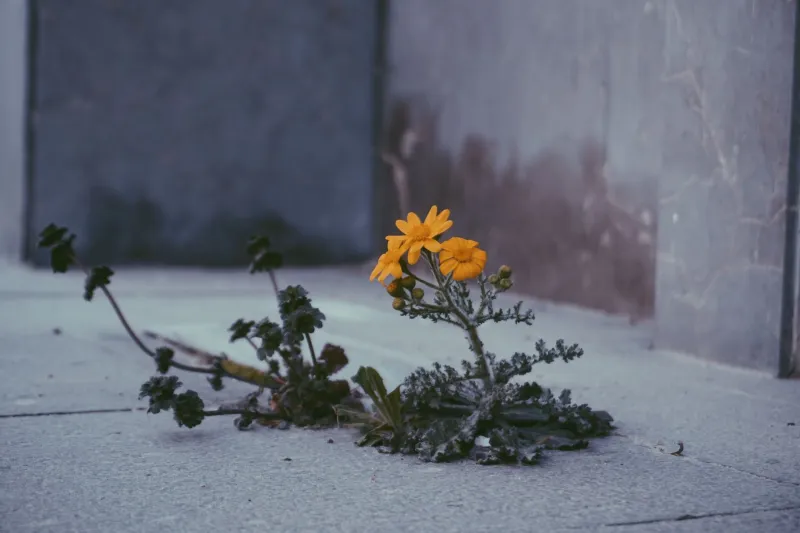
Weeds are a good entry point, partly because they're everywhere and partly because they're enormously underestimated. What we call a weed is usually just a plant that showed up without being invited — which is to say, a plant behaving exactly as plants have always behaved.
Dandelions, for instance, are not just dandelions. They're one of the earliest nectar sources for bees in spring, sometimes blooming before almost anything else. Their deep taproots break up compacted soil. Their leaves are edible and nutritious. The fact that we've spent decades poisoning them out of our lawns is one of the stranger chapters in American horticultural history.
Crabgrass, purslane, clover, plantain (the broad-leafed kind, not the banana) — these plants that appear in sidewalk cracks and garden borders are all doing ecological work. Some fix nitrogen. Some provide larval habitat for butterflies. Some are edible. Once you start learning them, your neighborhood becomes a different place. You're no longer walking through a vague green background. You're walking through a community of organisms with names and histories and relationships.
A good starting point for US readers: the iNaturalist app (free, and genuinely excellent) lets you photograph a plant and get an identification within seconds. Spend one lunch break walking around your block photographing every plant you don't recognize. By the time you get home, you'll know a dozen things you didn't before.
The Ecological Moments You're Already Missing
Beyond plants, suburban and urban landscapes are full of what I think of as ecological moments — small, unrepeatable events that are happening constantly and going largely unobserved.
The chimney swifts that spiral above certain neighborhoods at dusk in summer, chattering in that high-pitched way, are one of the great urban wildlife spectacles that almost nobody knows about. They're also in serious decline, which makes watching them feel both joyful and urgent.
The way ant colonies manage their traffic patterns on a hot sidewalk is genuinely fascinating if you give it five minutes. Ants use pheromone trails, and on a warm day you can sometimes see the trails clearly — a living, moving system of distributed intelligence operating about two inches from your shoe.
In the fall, watch the goldenrod. Not because it's beautiful (though it is) but because if you look closely, goldenrod in bloom is hosting entire communities — beetles, bees, wasps, flies, spiders waiting for all of the above. A single plant in peak bloom can host dozens of species simultaneously. You could spend an afternoon there and not see everything.
Making Space for the Unplanned
If you have any outdoor space at all — a backyard, a balcony planter, even a strip of ground near a front stoop — there are small things you can do to invite more wildness in.
Leave a section of your lawn unmowed through the summer. Seriously. The difference in insect activity between a mowed lawn and a patch of knee-high grass and clover is dramatic and almost immediate. If your HOA won't allow it, try a container of native wildflower mix on a balcony or porch — plants like black-eyed Susans, coneflowers, and native asters are all extremely low-maintenance and will bring in pollinators that your neighbors won't even notice but that will quietly change the ecology of your immediate block.
Leave the dead stems of perennials standing through winter instead of cutting them back. Many native bees nest in hollow stems. Many insects overwinter in the leaf litter that we're so eager to rake away. The tidy garden is, ecologically speaking, a fairly dead one.
The Practice of Paying Attention
Ultimately, finding wildness in a suburb is less about what's out there and more about developing a practice of attention. The strip mall lot, the weedy curb, the spider web in the corner of your porch — these things are always available. What changes is whether you're moving through your neighborhood or actually seeing it.
Start small. Pick one spot near your home — a specific tree, a patch of ground, a corner of your yard — and visit it once a week for a month. Notice what changes. What's blooming or not blooming. What birds or insects are using it. What the light does to it at different times of day.
You'll be surprised how quickly a blank background becomes a place you know. And knowing a place — really knowing it, in the particular and specific way that comes from sustained attention — is one of the quieter and more lasting forms of joy available to us.
The wild doesn't need a road trip. It just needs you to stop walking past it.